Board Meetings Without Blind Spots: How Founders Can Stop Guessing What Their Board Said
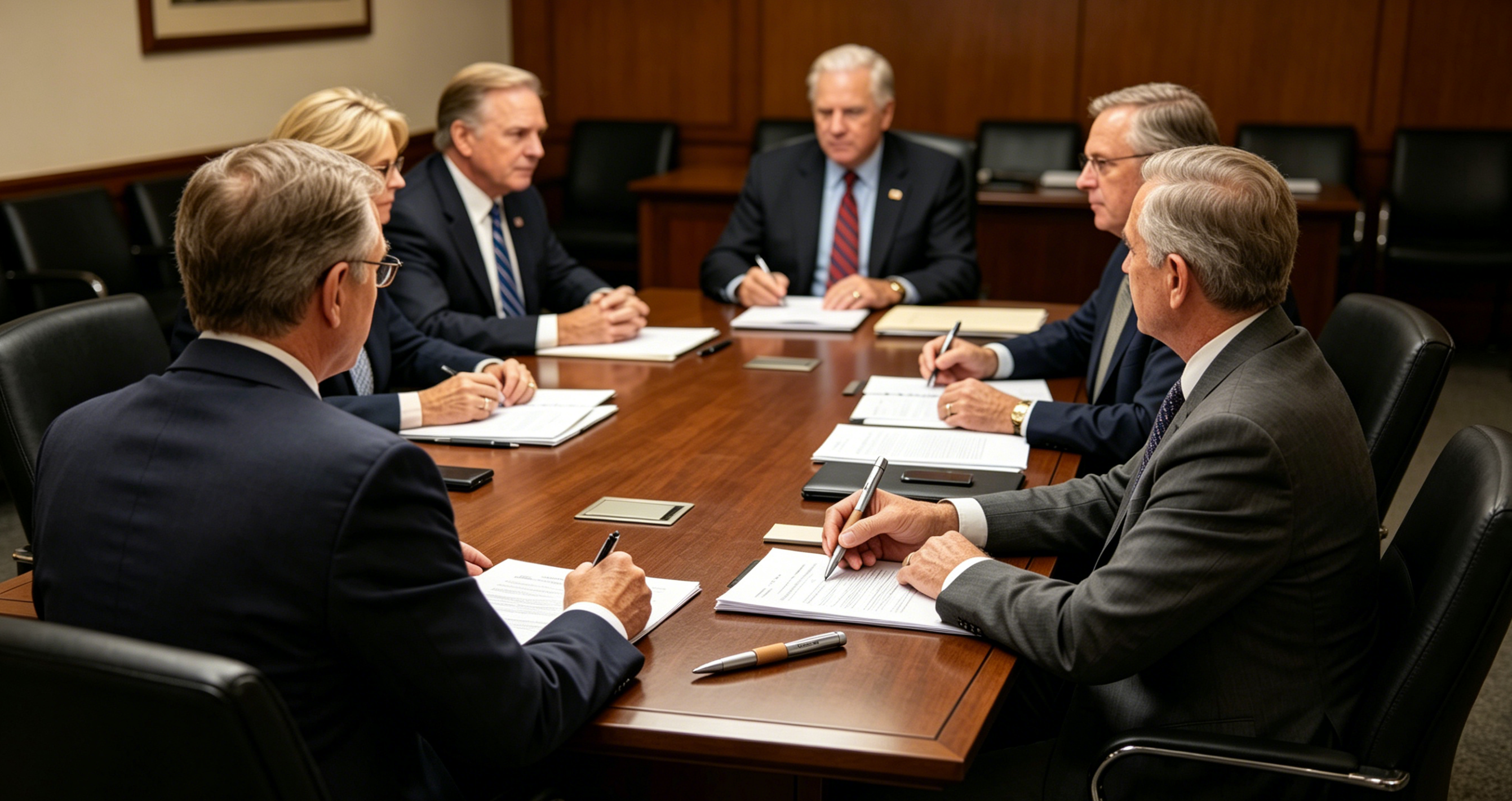
Board meetings are among the highest-stakes conversations a founder will ever have. In a single two-hour session, your board might reframe your strategy, raise a concern about a key hire, signal a change in their appetite for the next round, or give you a piece of advice that — if you actually implement it — could change the trajectory of your company. Then you walk out and spend the next three days trying to remember exactly what was said, reconstructing half-remembered statements into something that looks like meeting minutes, and quietly wondering whether you missed something important. This is not a small problem. And it's completely solvable.
The Board Meeting Memory Trap
Founders are performing in board meetings. You're presenting, defending, persuading, and absorbing — all at once. The cognitive load is immense. Under that kind of pressure, your brain prioritises what it needs to perform well in the moment. Detail retention takes a back seat.
Your board members may number three, five, or seven people, each with different perspectives, different information, and different agendas. The threads of conversation cross and intersect. By the time a two-hour session closes, you have a rich but tangled web of input — and your notes, if you managed to take any, reflect a fraction of what actually happened.
The problem compounds when you try to action the meeting. You send an update to a board member referencing a decision you believe was made. They remember it differently. You're not sure which board member raised the concern about your CAC trend — was it the lead investor or the independent director? You can't find where in your notes someone mentioned the competitive threat they were tracking.
The board meeting has become a game of telephone between what happened and what you're working from.
What a Complete Board Meeting Record Actually Contains
A useful board meeting record is not just the formal minutes — the sanitised, past-tense summary that captures resolutions and approved motions. Formal minutes are legally useful. They are not operationally useful.
What a founder actually needs from a board meeting:
The exact language board members used when expressing concerns. "I'm a bit worried about the burn rate" and "I think we need to have a serious conversation about the burn rate" are not the same statement. The difference tells you how urgent the concern actually is.
The conditions that were attached to positive signals. A board member who says "I'd support a Series B at this stage if we see three more enterprise logos by Q2" has given you a precise roadmap. A founder who remembers that as "the board seemed positive about the next round" has missed the roadmap entirely.
The ideas and suggestions that came up in passing. Board members are experienced operators and investors. Their off-the-cuff suggestions — a potential hire they know, a channel they've seen work, a partnership worth exploring — are often more valuable than their formal agenda contributions. These are the things that disappear from memory first.
The interpersonal dynamics. Which board members seemed aligned? Where was there tension? What energy shift happened when a particular topic came up? These signals are impossible to capture in notes but clearly present in a full conversation record.
Scriben in the Boardroom
The boardroom is precisely the kind of environment Scriben was designed for. Discreet, professional, and physically appropriate for a high-stakes meeting.
Scriben's pen-shaped form sits on the table without comment. It captures every word spoken across the room with full-day battery — board meetings often run long, and the informal conversation over lunch that follows a formal session is frequently where the most important things are said.
After the meeting, you have a complete transcript of every board member's exact words. You can review the full context of any concern raised. You can pull the precise language from a commitment or a condition. You can identify the moment when the energy in the room shifted.
More practically: you can write board follow-up communications that demonstrate you heard everything. Board members notice when a founder's post-meeting email references something specific they said. It signals attentiveness. It builds trust. It shows the kind of operational discipline that makes investors more confident in their bet.
Building Institutional Memory Across Board Cycles
Companies that scale well have institutional memory. They know not just what was decided, but why it was decided, what alternatives were considered, and what the reasoning was at the time.
Most early-stage companies have almost no institutional memory. Decisions made in year one are forgotten or misremembered by year three. The board conversations that shaped strategic direction are reconstructed imperfectly, or not at all.
With Scriben, every board meeting becomes part of a searchable archive. The context for every major decision is preserved. When you onboard a new board member, you can walk them through the actual conversations that led to your current strategy — not a summary, but the substance.
This is the kind of operational infrastructure that separates companies that scale from companies that struggle with their own complexity.
A Simple System for Board Meeting Excellence
Before the meeting: Review the transcript of your previous board meeting. Know exactly where each board member's head was. Walk in with continuity.
During the meeting: Be fully present. Lead with authority. Let Scriben do the capturing. Make eye contact. Show up, not scribble.
Immediately after: Review the AI summary. Flag the three most important things you heard. Note any conditions, concerns, or commitments.
Within 24 hours: Send a personalised follow-up that references specific things board members said. Assign action items. Demonstrate that you were listening to every word.
Ongoing: Build your board conversation archive. Before every subsequent meeting, review the record of where things stood.
This is not complexity. It's the difference between a founder who commands their board and one who is managed by it.